14. July 2026
Flix CEO sets out technology positioning and European scale case at VivaTech, Bitkom, and Silicon Valley
Share this Article


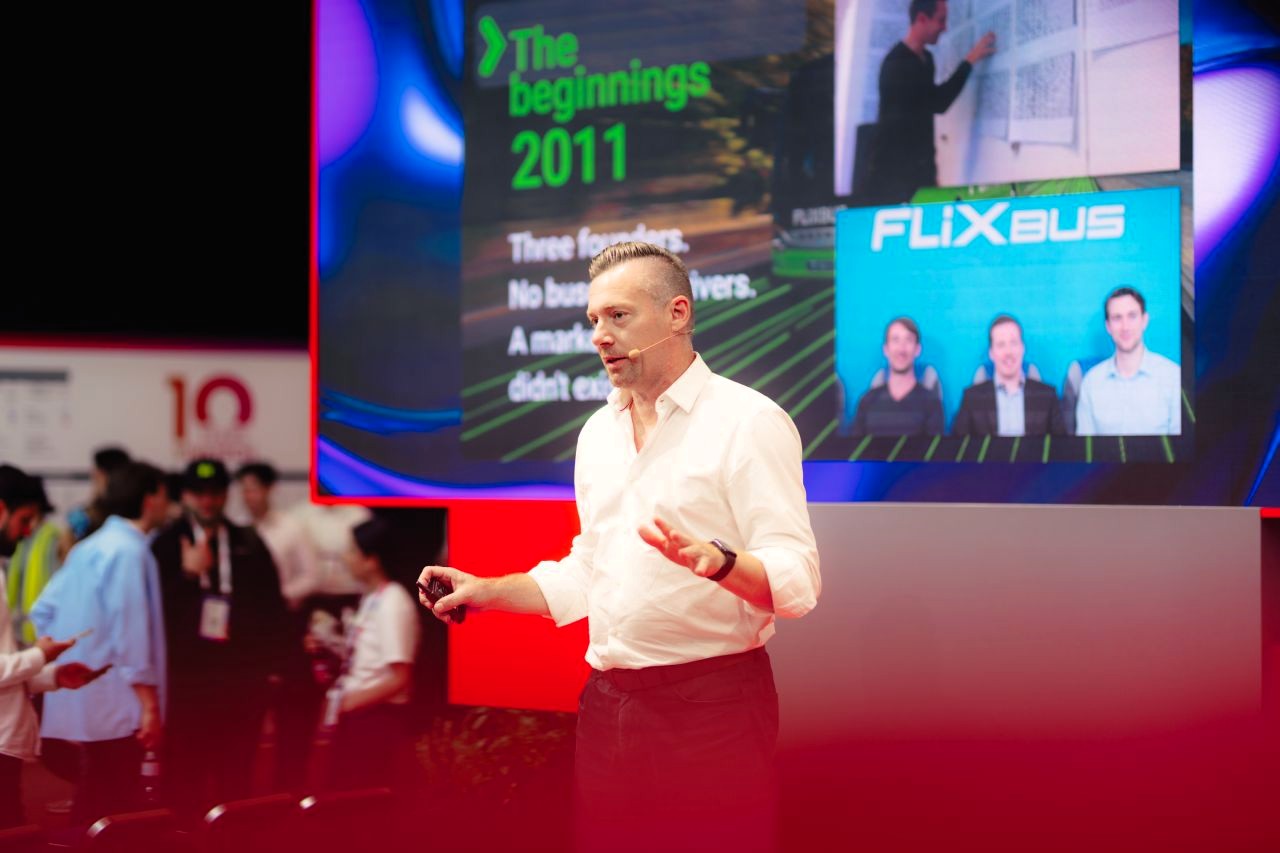
Over June and July 2026, Flix co-founder and CEO André Schwämmlein made the case for Flix as a technology company and for Europe’s capacity to produce global tech champions across three settings: a panel at VivaTech in Paris, a Silicon Valley visit with the full Flix C-suite, and a keynote at the Bitkom Digital Mobility Conference in Berlin.
A common thread ran through all appearances: that data and AI sit at the core of how Flix runs its network, and that Europe can build more companies at global scale if it resolves market fragmentation and access to growth capital.
The scale question at VivaTech
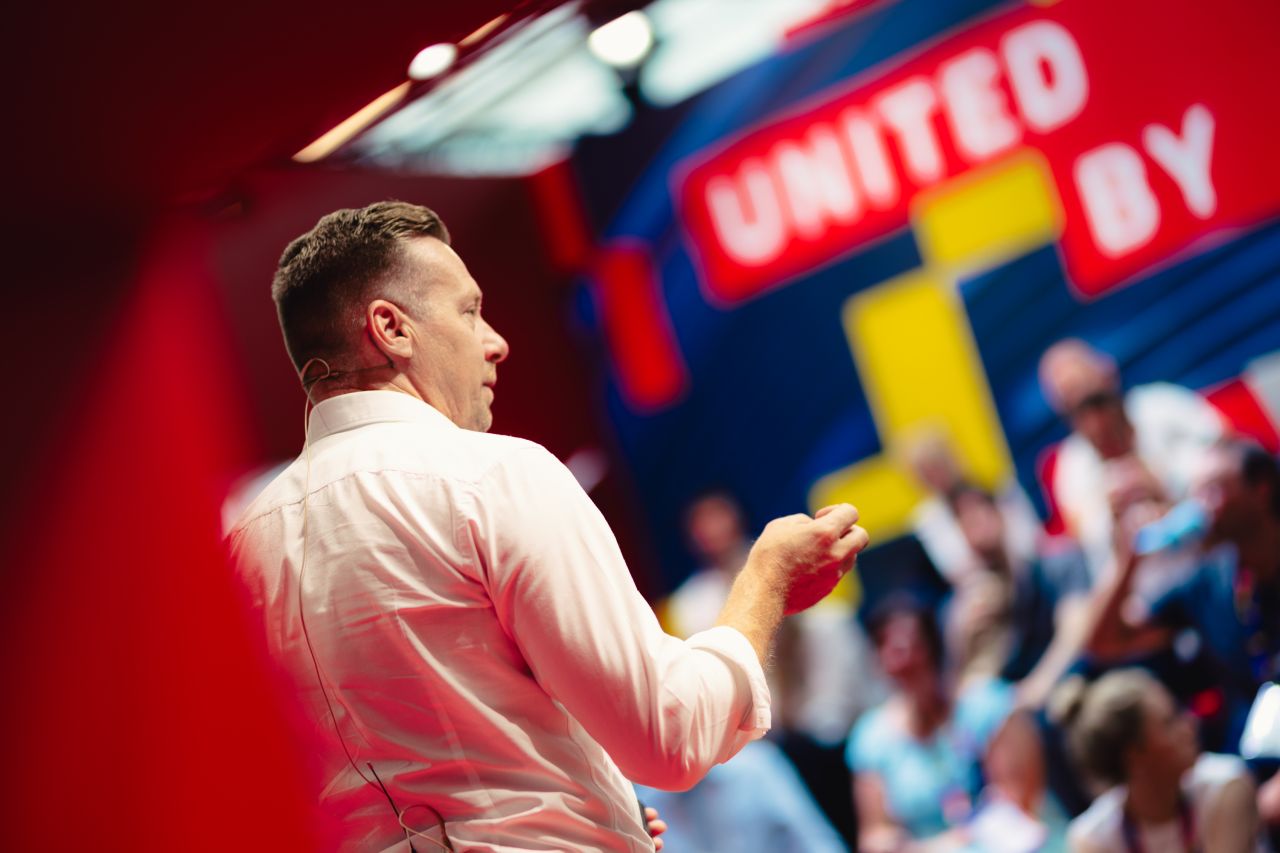
On June 18, Schwämmlein joined the VivaTech session Who Builds Europe’s Tech Champions? at the event’s tenth edition in Paris, where Germany was named Country of the Year. Europe has the talent, engineering expertise and consumer market to build global technology companies, he told the panel, but is held back by fragmentation across national markets, growth capital that is harder to access than in the United States, and the complexity of scaling across borders.
He cited Flix as evidence. Founded in Munich in 2011 by three founders in a market that did not yet exist, the company launched after Germany deregulated its long-distance bus market in 2013. Flix currently operates in 45 countries, connects more than 8,700 destinations, and has carried over 500 million passengers.
“Europe doesn’t lack entrepreneurs. It lacks scale,” Schwämmlein said, calling for a single European market rather than 27 fragmented ones and for investors to put more capital into scaling companies that are already established.
Silicon Valley benchmarking confirms the data position
Later that month, CEO Schwämmlein traveled to Silicon Valley with Flix’s full C-level team — co-founder and CIO Daniel Krauss, CFO Benjamin Gubitz, COO Fabian Stenger, and CCO Max Zeumer — meeting with representatives from Google, Amazon, Anthropic, Salesforce, Uber, and SAP, among others.
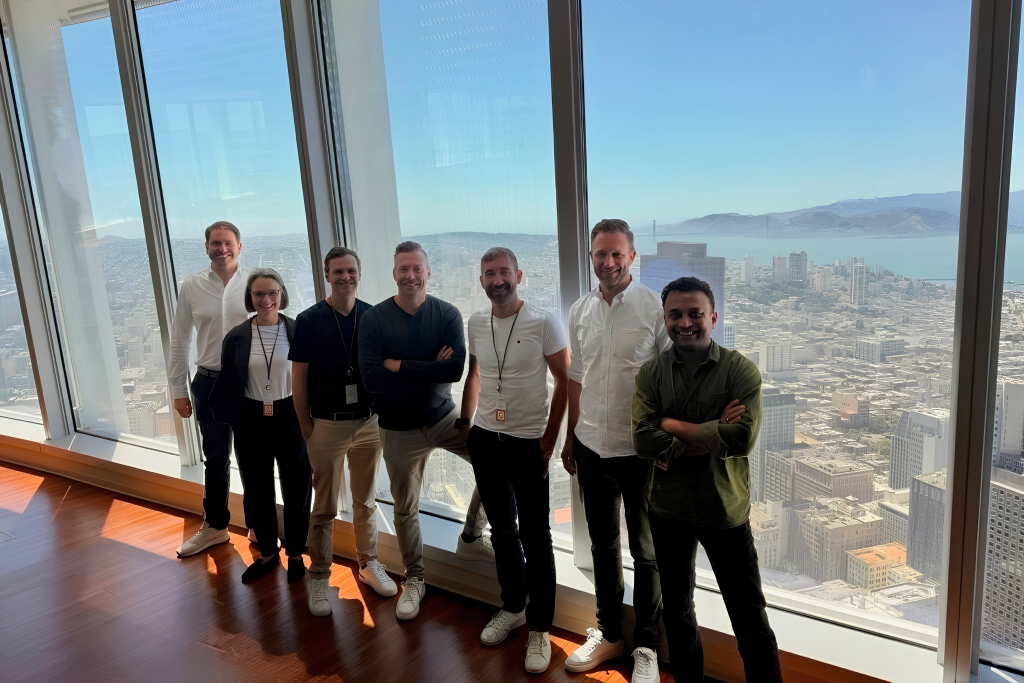
Left to right: Fabian Stenger (COO), Dorit Schindler (SVP People and Organization), Benjamin Gubitz (CFO), André Schwämmlein (co-founder and CEO), Daniel Krauss (co-founder and CIO), Max Zeumer (CCO), Shobhit Agrawal (VP Engineering)
Schwämmlein reported on the trip that the conversations reinforced Flix’s view on where its competitive position sits as AI changes how travel is booked: because Flix operates its own network, owns the customer relationship, and holds unique inventory across buses, trains, and airport shuttles under the FlixBus and FlixTrain brands, clean and structured data becomes an increasingly concrete asset rather than an abstract advantage. The visit also confirmed that AI-driven changes to how people discover and book travel are progressing, but that the transition from traditional search and booking journeys remains gradual.
Data and AI at the Bitkom conference
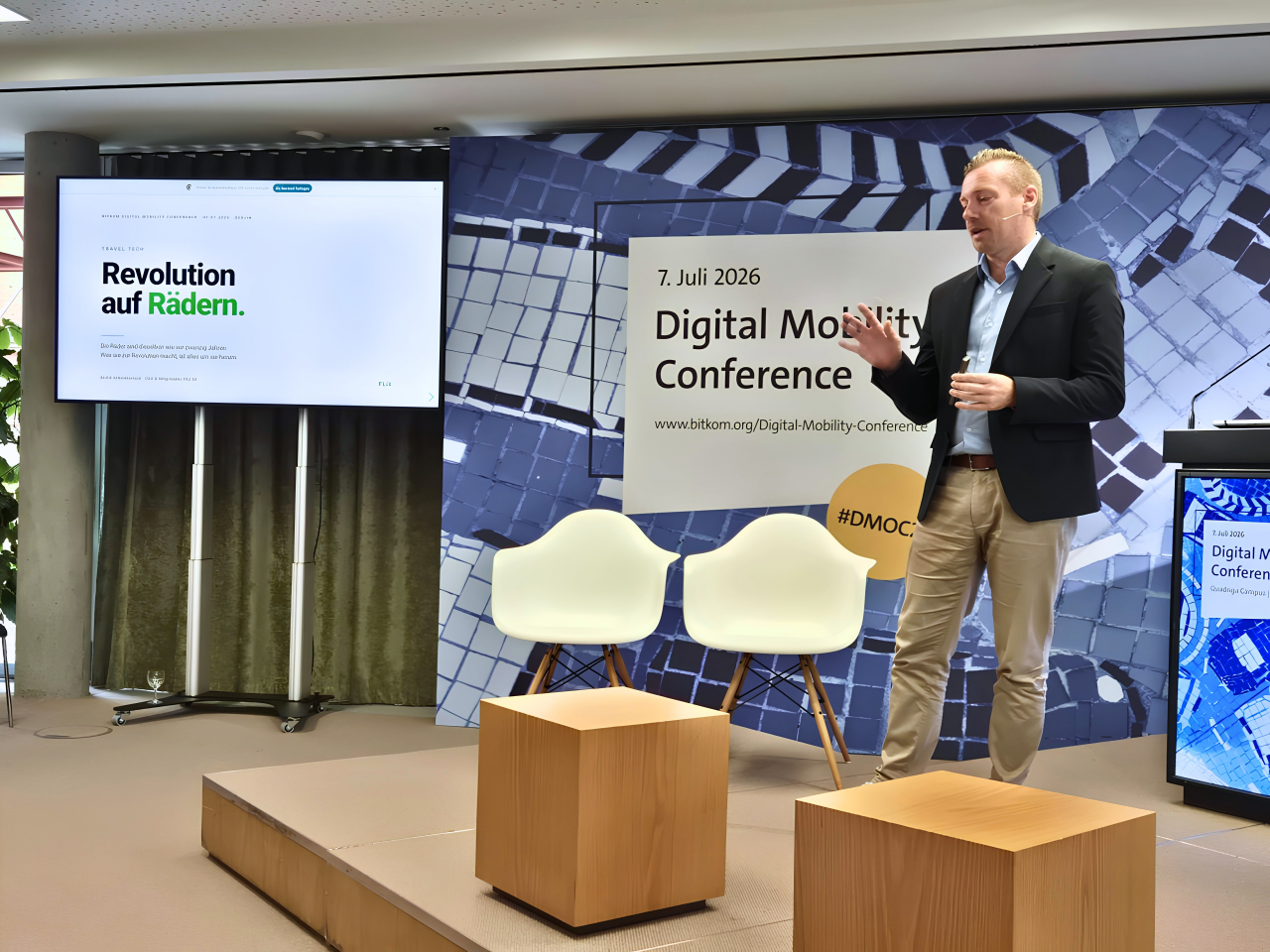
On July 7, Schwämmlein gave a keynote at the Bitkom Digital Mobility Conference in Berlin. His argument was that the next shift in mobility is less about electric buses, autonomous vehicles, or new trains than about the industry becoming data-driven – a transformation largely happening behind the scenes. The companies able to recognize patterns before others and apply AI to act on them will set the pace, he said. Flix had built heavily around machine learning well before the current AI wave, using it to optimize operations, forecast demand, and identify where to expand its network; AI now allows it to make decisions faster and identify opportunities that would previously have gone unnoticed.
“Flix is not simply a transport company. We are a travel tech company. Every bus or train you see out there is powered by a complex digital layer that continuously learns and improves our business,” Schwämmlein noted.